


Gastroenterology PGIMER Chandigarh A Conversation on Medicine, Mentorship, and Meaning
His peers call him a clinician par excellence and a wonderful human being.
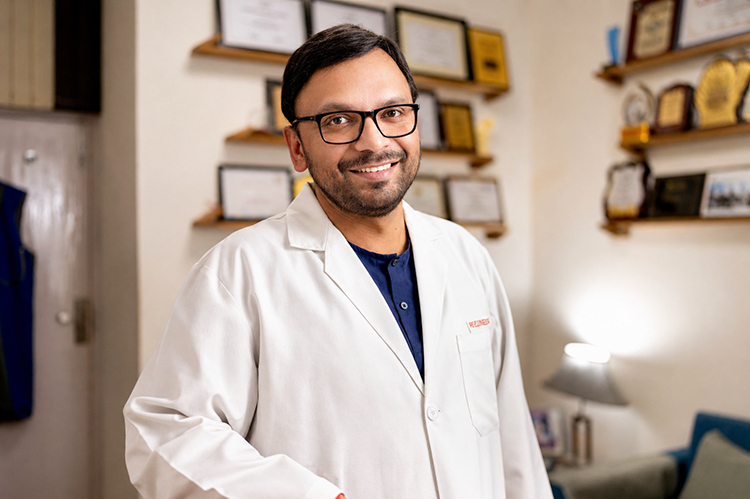
His list of awards and recognitions is illustrious, ranging from top honours from Indian and international academies and agencies. He hails from an Army background and is the only member of his family to pursue a medical profession. Meet Prof (Dr) Surinder Singh Rana, a highly competent doctor known for his meticulous, highly involved patient care in the Gastroenterology department at PGIMER, Chandigarh. Dr Rana, who heads Unit III at the Department, has extensive expertise in advanced endoscopy, pancreatobiliary disorders, and interventional procedures.
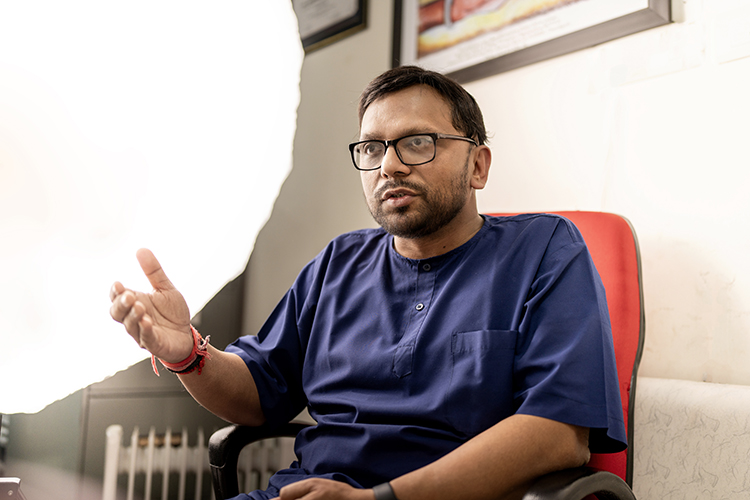
Here is a conversation between Dr Surinder Rana and TLJ Magazine’s Chief Consulting Editor- Dr Neha Miglani.
As a commoner, what are some general tips for keeping the gut healthy?
The first golden rule is eating healthy, which means combining foods that provide carbohydrates, protein, fats, minerals, and antioxidants. Our traditional Indian diet is quite balanced. It includes pulses, rice, roti, vegetables, fruits, and salads. This ensures that you get fibre, minerals, antioxidants, and essential nutrients. One should always maintain a balanced diet and avoid foods that are excessively high in fat or carbohydrates, as these can trigger reflux. Such food is digested slowly, and you tend to gain weight. One should avoid weight gain because obesity is the root of many diseases. Your diet should always be proportionate to your level of activity.
If you have a sedentary lifestyle, you should not consume an energy-dense diet. On the other hand, people involved in manual labour require a diet rich in carbohydrates and fats to meet their energy needs. Another important rule is to maintain a gap of about two hours between dinner and sleep. This allows the stomach to empty properly; if it doesn’t, it can lead to several health problems.
We see many advancements in how PGI handles gastro patients, from modern machines to advanced labs in your department. Can you share how newer technologies have improved patient care here?
Advancements in technology are a natural part of medical progress. As a speciality grows, you get more instruments, devices, and procedures. We are at par with any top institution in the world. We perform all advanced procedures, and our research is published in top-rated global journals. Our faculty members serve on the editorial boards of leading journals. A high patient load here provides exposure to a wide variety of diseases and their diverse manifestations, a unique feature of PGI. This greatly enhances the experience from a doctor’s perspective.
The more patients you treat, the more expertise you gain. It also helps develop managerial skills. Rather than seeing patient-load as a disadvantage, I see it as both a challenge and an advantage.
In this age of AI, do patients come to you with a lot of information on diseases? How do you manage such cases?
In a way, it is beneficial for the patient to have access to information. The patient and the family should be well informed about the problem. Yes, but sometimes patients run their reports through ChatGPT and then ask us why a certain test isn’t performed in their case. Then we patiently explain the specifics of the case and educate them to read the report in its entirety and understand the conclusions properly.
You mentor many young doctors. What do you think are the most important qualities a good doctor should have? What do you expect from them before they complete their training under you?
One major concern today is that clinical medicine is gradually taking a back seat, which is quite unfortunate. Medicine is becoming increasingly investigation-oriented. The human touch of a doctor is slowly fading away. Many doctors do not thoroughly examine patients; instead, they rely heavily on investigations to diagnose.
I strongly emphasise clinical training and teaching. Students should examine patients, sit with them, and listen to their problems for at least 10 to 15 minutes. They should conduct a thorough clinical examination and formulate a clinical diagnosis, which investigations can then confirm. Our teachers in the medical field used to say that the patient themselves reveal 90 per cent of diagnoses. If you listen carefully, the patient will guide you toward the diagnosis.
Equally important is empathy. Increasingly, doctors are becoming like machines. We must understand the patient’s problems and try to put ourselves in their place. Patients expect doctors to be empathetic and to understand their pain. It is often said that the best doctors are the best listeners. Giving patients time helps them open up, and that, in turn, leads to better diagnosis.
You have an enormously long list of honours. Can you please explain the relevance of a few of them?
Once you become a member of a society and contribute significantly, you are awarded a fellowship. Those who make exceptional contributions are honoured as Masters. In India, societies like the Indian Society of Gastroenterology and the Society of Gastrointestinal Endoscopy of India have conferred this honour upon me. Internationally, organisations such as the American Gastroenterological Association and the American Society of Gastrointestinal Endoscopy have awarded fellowships.
There are also science academies, such as the National Academy of Medical Sciences, the National Academy of Sciences India, and the Indian National Science Academy. These recognise contributions in research. Young scientists under 35 who make significant contributions are also honoured. I am grateful to have received such recognition as well.
Why did you choose this specialisation when you were a medical student?
As a young medical student, you want a speciality that combines patient examination, diagnosis, treatment, and procedural skills. Gastroenterology offers that perfect balance.
You examine patients, make diagnoses, and perform procedures. It involves both intellectual capability and technical skills. From clinical evaluation to advanced investigations such as ultrasound and endoscopic ultrasound, to procedures, it is a comprehensive speciality where you do everything. That is what drew me towards gastroenterology.
Do you hail from a family of doctors? Can you please talk about your background and what inspired you to enter the medical field?
I come from a family of army personnel. My father and grandfather were in the army, and I am the only one in my family to choose medicine. I felt that medicine is a field where you can bring meaningful change to someone’s life and to society. As a young person, honestly, I was deeply inspired by the movie Anand, which influenced my decision.
Were your parents happy with your choice?
Yes, absolutely. They were happy that someone in the family chose medicine. It is both a challenging and prestigious career.
How does it feel looking back at your journey so far?
It feels great, but the journey is still ongoing.
What has been the most fulfilling part of your career to date?
Working in PGI has been the most gratifying experience. Very few people get this opportunity, and I feel grateful for it.
I always wanted to be a doctor, and when you achieve what you truly desire, you work with passion. You do not complain about workload or lack of personal time. At PGI, you can serve patients without financial considerations affecting your decisions. Government support ensures that even poor patients receive treatment. The most satisfying aspect is that patient care always comes first. This kind of freedom is rare
Dr Surinder Rana completed his graduation and MD from Maulana Azad Medical College, followed by a DM in Gastroenterology from PGIMER, where he received the Maj Gen Amir Chand Medal for Excellence in Research. He has authored over 600 peer-reviewed publications in reputed national and international journals. He has earned several prestigious honours, including the ASGE Crystal Award from the American Society for Gastrointestinal Endoscopy, grants from the European Society of Gastrointestinal Endoscopy, and awards from the Indian Council of Medical Research. He is also a recipient of the Young Scientist Medal from the Indian National Science Academy and the National Academy of Sciences India.
How do you relax and recharge, and what are your hobbies?
I have always been a sports person. I played basketball and badminton at a high level and represented my college. I was also the sports secretary during my MBBS days.
Whenever I get time, I usually play. I also enjoy reading autobiographies of great people and religious scriptures. I have a deep interest in the Upanishads, Vedas, and Gita. So I utilise my time outside work for sports and reading.
What inspires you the most, personally and professionally?
It is a desire to achieve perfection. Whether it is a small task or a big one, I always try to do it perfectly. I plan, think, and then try to execute things as best I can. Some teachers during my training also played a very important role in shaping this mindset.
Who is your role model or people who have been very important in your journey?
During my school days, my physics teacher, Mr D K Tyagi, predicted that I would rank among the top 100 in the All-India Pre-Medical Test. That prediction came true, and it greatly motivated me. During my MBBS, Dr Premashis Kar guided me and inspired me to pursue gastroenterology. At PGI, Dr D K Bhasin became a major role model for me. He instilled discipline, hard work, punctuality, and attention to detail. Close friends and colleagues in PGI have also been constant sources of motivation.
My wife, Sonali, has been a strong pillar of support. She has been an extremely understanding partner and has always managed things wonderfully well back home, including our daughters, Shranya and Shanvi. She is an educationist by profession and a faculty member in Botany at DAV College, Chandigarh. Despite my demanding schedule, she has always stood by me. Family support plays a crucial role in any journey- in the first few years, it was my parents’ support, then later my wife and children. I was fortunate to have received family support throughout.
Do you push your kids towards medical studies or away from this field?
No. I believe in giving freedom. The same applies to my students here in PGI. We can guide, but the decisions should be theirs. I never believe in forcing anyone. Everyone should have the freedom to choose their own path.
What is your goal for the next 5 years or whatever timeline you set for yourself, both professionally and personally?
I do not set long-term goals. Every day, I try to make myself better than I was yesterday. I focus on improving patient care and doing meaningful clinical research that benefits patients, not just adding publications. Improving every day ultimately leads to bigger achievements. For me, becoming better each day is more important than chasing distant goals.